How hail actually damages a roof
Hail rarely leaves an obvious hole. Most of the real damage is subtle enough that homeowners miss it entirely.
Granule Loss
Hail knocks the protective granule layer off asphalt shingles, exposing the material underneath to sun and weather — accelerating wear long after the storm passes.
Bruising & Soft Spots
Impact can weaken shingles from within without breaking the surface — invisible from the ground, but a real structural weak point.
Cracks & Splits
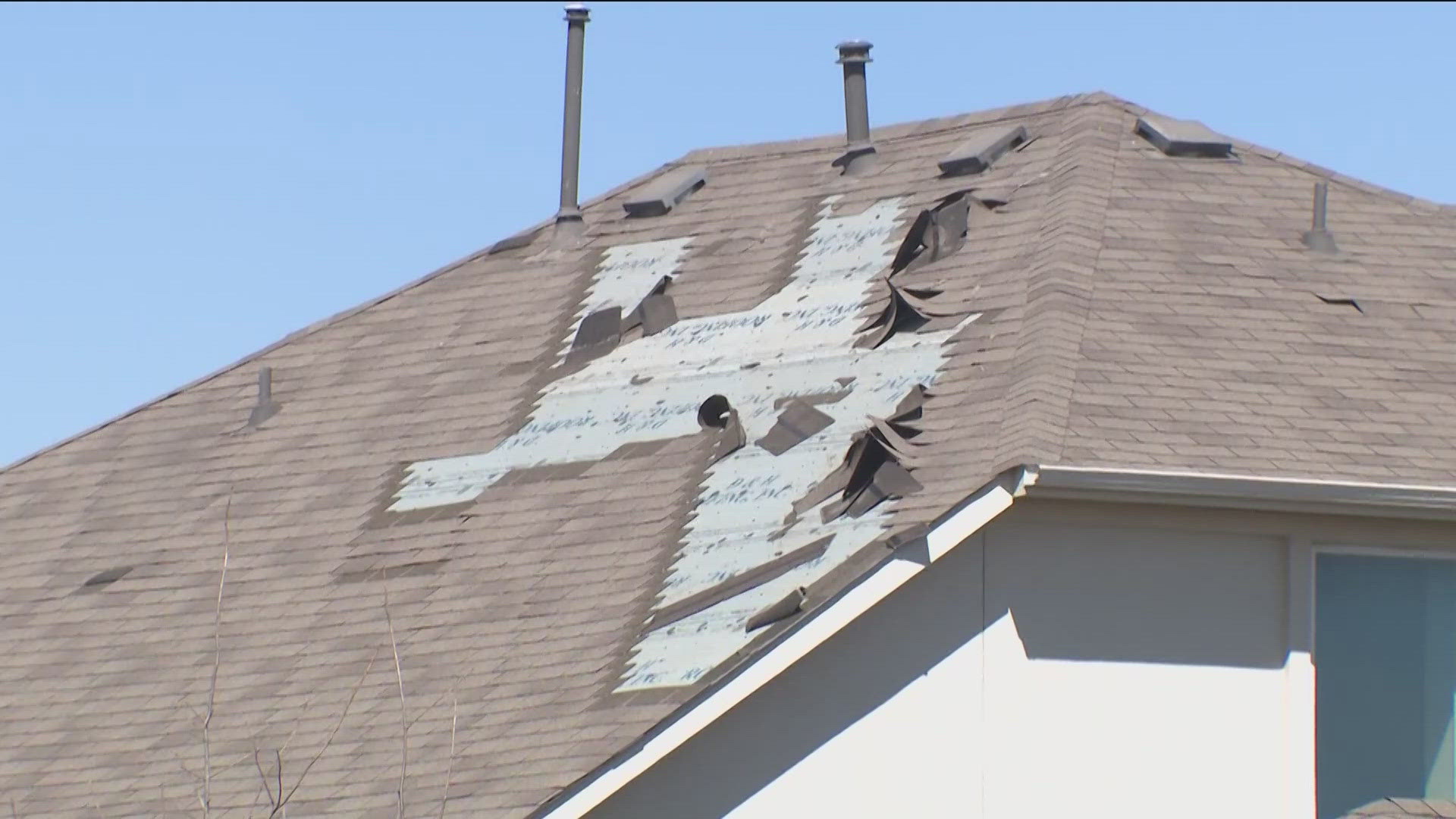
Larger hail can crack or split shingles outright, creating a direct path for water to enter and cause damage that worsens over time.
Component Damage
Flashing, vents, and ridge caps are just as vulnerable as shingles — and just as critical to keeping water out of the structure.
Exterior damage beyond the roof
Storms rarely stop at the roofline. A full exterior review often reveals:
- Dents and damage to gutters and downspouts
- Cracks, chips, or impact marks in siding
- Damage to window trim and exterior finishes
- Dents in vents and other exposed metal components
What to do after a storm
If your neighborhood was hit by hail or high wind, here's the honest, practical sequence:
- Schedule a free inspection — even if you don't see obvious damage. Most hail damage isn't visible from the ground.
- Document what you can safely see — granules in gutters, dented vents, or visible dings on siding and downspouts.
- Don't wait too long — insurance claims often have time limits, and untreated damage can worsen with the next weather event.
- Let a professional meet your adjuster — see our insurance claims page for how that process works.
Direct answers
What size hail can damage a roof?
There is no single damage threshold. Hail size matters, but hardness, shape, wind speed, impact angle, roof age, material, substrate and prior condition also affect the result. A report of hail nearby does not prove damage at a specific property.
Use official reports as event context and a property inspection for the roof-specific conclusion.
Prepared by Sal Morales Roofing · Basis: general roofing knowledge · Last reviewed 2026-08-15
What is the difference between cosmetic and functional hail damage?
Cosmetic damage changes appearance without necessarily impairing water shedding or expected service. Functional damage affects the roof's ability to perform, such as fractures, punctures, displaced components or compromised seams. The distinction is material- and assembly-specific.
Insurance treatment depends on policy language and facts; this site does not make coverage determinations.
Prepared by Sal Morales Roofing · Basis: general roofing knowledge · Last reviewed 2026-08-15
When should a roof be inspected after a storm?
Arrange an inspection promptly when there is active leaking, displaced material, visible impact damage, debris strikes or a credible nearby hail or wind report. If no signs are visible, an inspection can still document baseline condition after a significant event.
Stay on the ground; damaged roofs can be slippery or structurally unsafe.
Prepared by Sal Morales Roofing · Basis: safety guidance · Last reviewed 2026-08-15
What wind damage signs can I see from the ground?
Look for lifted or missing shingles, displaced ridge or edge material, bent metal, loose gutters, damaged vents, debris impacts, exposed underlayment or interior water entry. Absence of visible signs does not rule out concealed damage.
Do not climb onto the roof to investigate after high wind.
Prepared by Sal Morales Roofing · Basis: safety guidance · Last reviewed 2026-08-15